Formats and Editions
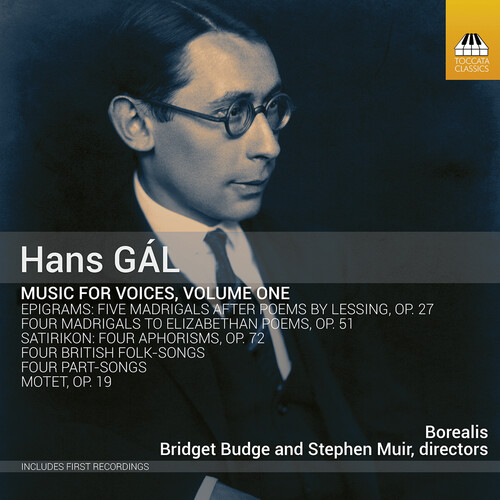
1. Motette, Op. 19
2. 4 Madrigals To Elizabethan Poems, Op. 51: No. 1, Youth And Cupid
3. 4 Madrigals To Elizabethan Poems, Op. 51: No. 2, True Love
4. 4 Madrigals To Elizabethan Poems, Op. 51: No. 3, A Cradle Song
5. 4 Madrigals To Elizabethan Poems, Op. 51: No. 4, Foolish Love
6. Epigramme, Op. 27: No. 1, Stillleben
7. Epigramme, Op. 27: No. 2, Hymnus
8. Epigramme, Op. 27: No. 3, Vita Brevis
9. Epigramme, Op. 27: No. 4, Irrtum
10. Epigramme, Op. 27: No. 5, Grabschrift
11. 4 Part-Songs: No. 1, To Spring
12. 4 Part-Songs: No. 2, Madrigal
13. 4 Part-Songs: No. 3, Hymn To Diana
14. 4 Part-Songs: No. 4, Invocation
15. Satirikon, Op. 72: No. 1, Weisheit Des Schöpfers
16. Satirikon, Op. 72: No. 2, Gute Vorsätze
17. Satirikon, Op. 72: No. 3, Von Der Schicklichkeit
18. Satirikon, Op. 72: No. 4, Von Der Wahrheitsliebe
19. 4 British Folk-Songs: No. 1, Early One Morning
20. 4 British Folk-Songs: No. 2, An Eriskay Love Lilt
21. 4 British Folk-Songs: No. 3, O Can Ye Sew Cushions?
22. 4 British Folk-Songs: No. 4, Ye Banks And Braes
More Info:
Whether in his original home of Vienna, as a conservatoire director in Germany, or as an émigré in Edinburgh, where he became one of the mainstays of musical life, Hans Gál (1890-1987) championed choral singing as a way of directly involving people in making music: he founded and conducted a number of choirs and provided an extensive output of choral compositions. This first volume in a long-term project to record his choral music presents a rich variety of works for a cappella voices, ranging from demanding eight-part choruses to charming folksong settings.