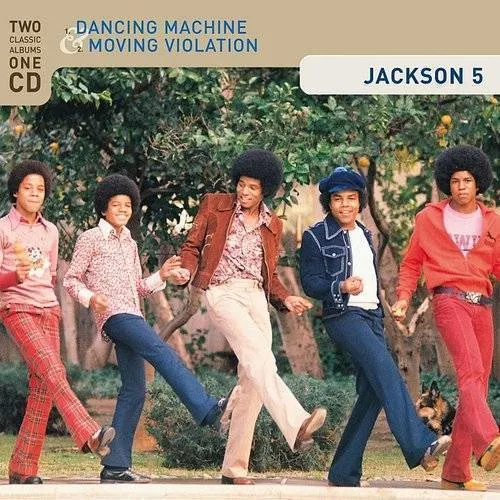

Dancing Machine/Moving Violation
Tracklist
More Details
''Moving Violation'' is the ninth and final official studio album released on Motown Records by The Jackson 5.
By the end of their six-year run in Motown, all five Jackson brothers had matured dramatically in both age and vocals: youngest member Michael was, at 16, the only non-adult in the group. With the boys now becoming men, it was difficult for the group to deal with Motown's policies against writing and producing their own material.
Like ''Dancing Machine'' before it, ''Moving Violation'' was an early-disco album. The group's funk-based version of Diana Ross & the Supremes' 1968 single "Forever Came Today" was a club hit, while the single's B-side, the R&B ballad "All I Do Is Think of You", became a popular and frequently covered song in its own right. The album would go on to sell 1.6 million copies worldwide.
After this album, the Jackson 5, at the behest of father Joseph, left the Motown label after securing a new deal with CBS Records. Motown sued the Jackson 5 for breach of contract, and refused to allow them to leave. After some litigation, Motown allowed the group to leave for CBS, but withheld ownership of the "Jackson 5" name and trademark. Joseph continued the legal battle, until Michael suggested that they simply change the name of the act to "The Jacksons" and end the litigation.
Besides their name, the Jackson 5 left behind secondary lead singer Jermaine Jackson at Motown. Jermaine was married to Motown head Berry Gordy's daughter Hazel, and ultimately chose Motown and the Gordys over his brothers. This move incensed Joseph, who intoned that "my blood runs through Jermaine's veins, not Berry Gordy's." Jermaine would go on to have a semi-successful eight-year solo career at Motown. Jackie, Tito, Marlon, and Michael Jackson moved on, hired youngest Jackson brother Randy and began recording for CBS Records in 1976. Motown would issue two compilation albums, ''Joyful Jukebox Music'' in 1976, and ''Boogie'' in 1979, made up of archived recordings the group had made during their tenure at the label. - Wikipedia