

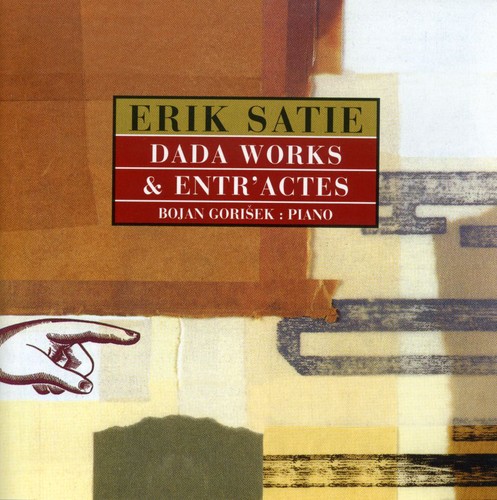
Dada Works and Entr'actes
Currently Unavailable
Tracklist
1
Trois Morceaux en Forme de Poire
2
Ragtime Dada
3
Relache Part 1
4
Entr'acte (Cinema)
5
Relache Part 2
6
Beach-head conditions : 11 June 1944
7
Bomber Raid On 21st Panzer Div.: 11 June 1944
8
Beach-head Mosquito patrol : 12 June 1944
9
H.M.S. Warspite Bombardment: 12 June 1944
10
Normandy landing strip : 14 June 1944
11
Airmail to Normandy : 19 June 1944
12
Church bells in Normandy : 14 June 1944
13
King George VI visits Normandy : 16 June 1944
14
Normandy battlefront : 16 June 1944
15
Fighting towards Caen : Villers Bocage : 16 June 1944
16
Derby Day afloat : 17 June 1944
17
Battle of Tilly-sur-Seules : 17 June 1944
18
Tilly after capture : 20 June 1944
19
Gale damage, beach head : 24 June 1944
20
Operation Epsom : attack on Granville : 26 June 1944
21
Never a dull moment : 26 June 1944
22
Calling Invasion Forces : German propaganda May 1944
23
Atlantic Wall : German propaganda May 1944
About This Release
CD collection of Dada-related works by French avant garde composer Erik Satie (1866-1925) including scores for Francis Picabia, Tristan Tzara, Kurt Schwitters and Rene Clair. Was a sworn enemy of the Surrealist faction lead by Andre Breton. According to Man Ray, Satie was the only composer who had eyes. All of Satie's principle Dada-related works are included on this unique CD: Trois morceaux en forme de poire, performed by Satie in July 1923 at Tzara's notorious Soirée du Coeur a barbe, at which fighting broke out between Tzara's supporters and the proto-Surrealist faction. Ragtime Dada, an extract from the ballet Parade performed at a series of Dada soirees by Kurt Schwitters and Theo van Doesburg in 1922. Cinéma was Satie's custom score for the celebrated intermission film by René Clair, while for their curtain call Satie and Picabia drove onstage in a tiny car, resplendent in jewels and furs, the whole production amounting to an act of anti-art provocation. Both are Satie's arrangements for solo piano. The 70 minute CD (40 tracks) is performed on piano by Bojan Gorisek, while the booklet features archive images and detailed historical notes by James Hayward.
Erik Satie
Dada Works and Entr'actes
CD · N