|


|
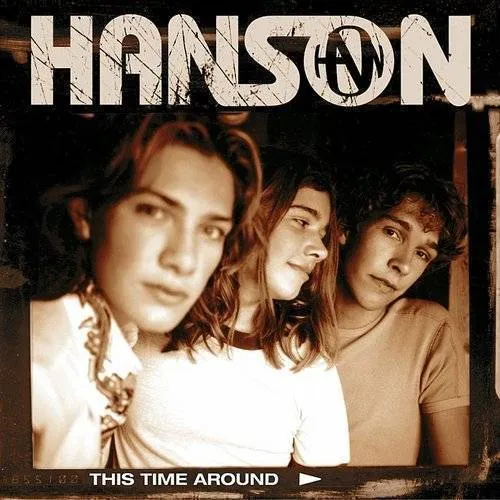
This Time Around was released in 2000 and is the seventh album by American pop rock group Hanson. Although Hanson had several albums in between, ''This Time Around'' is their first standard studio release since 1997s ''Middle of Nowhere''.
''This Time Around'' didn't have the commercial success of its predecessor ''Middle of Nowhere''. This may be in part due to the change in Hanson's focus: ''This Time Around'' doesn't feature as many bubblegum pop style tunes like ''Middle of Nowhere''. Instead Hanson opted to focus on a more classic rock sound, or as MTV.com put it "Yes, we're talking stadium rock". The album is also heavy on ballads, with songs such as "Sure About It" and "A Song to Sing" covering the themes of teenage insecurity and loneliness, much like "Weird" from ''Middle of Nowhere''.
Critically, ''This Time Around'' was very well received. Billboard noted "It all adds up to a collection that successfully sets Hanson apart from the current teen-pop phenomenon that it helped start -- at least from a creative perspective", and CDNow said "This Time Around scores with more sophisticated harmonies and storytelling". ''Rolling Stone'' said, "Like a blond three-headed hydra, Hanson loom over the competition, making all other teen idols sound like Gerber-sucking clowns." Allmusic said, "It's hard not to miss the thrilling way Middle of Nowhere leapt out of the speakers upon its first spin with giddy fun, yet with its carefully considered craft and warmly ingratiating pop songs This Time Around is winning entertainment." However, not everyone was complimentary about the change in musical style, with Village Voice stating "If you thought they were bad when they were cute, or even that they were cute when they were good, believe me, you don't want to hear them mature", and ''New Musical Express'' with the even harsher verdict "But damn those cruel hormones - Hanson's collective balls have MmmDropped, and the giddy rush of adolescence seeks to mutate Mercury's finest investment into a trio of crack-voiced hulks". - Wikipedia